
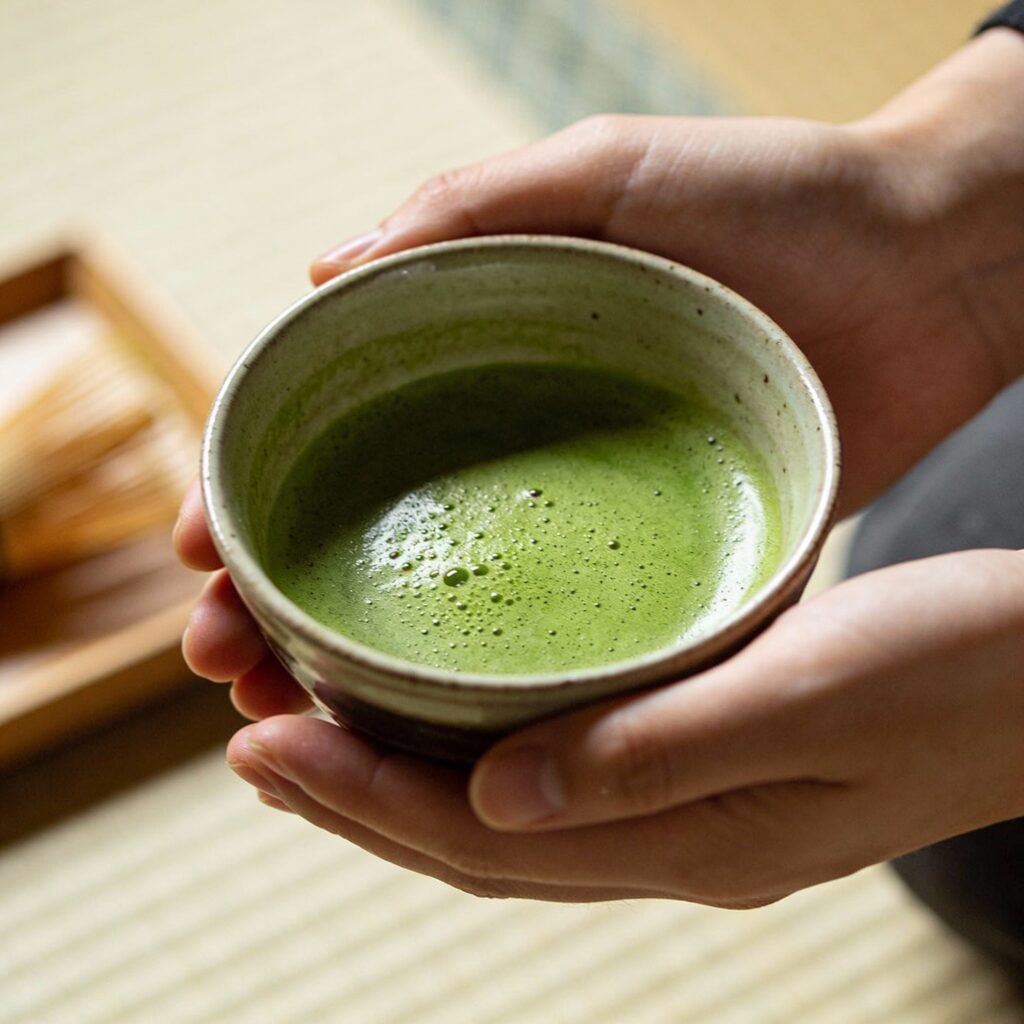
Have you ever sipped a matcha latte and thought, “Okay… but what actually is matcha?” Matcha is a finely ground green tea powder that you whisk into water, so you drink the tea leaf itself rather than steeping leaves and discarding them. That “whole-leaf” style is why matcha can feel richer and more intense than many brewed green teas, with a texture that can turn pleasantly creamy when whisked well. If you’ve only met matcha through lattes, the traditional version is refreshingly simple: powder, water, whisk—and a flavor that can swing from grassy-fresh to sweet-umami depending on quality and preparation.
And here’s the part that makes matcha more than just a modern green obsession: its story starts long time ago. Powdered tea culture developed in China and was especially prominent during the Song dynasty (960-1279 CE), which is basically matcha’s “prequel era.” The practice later influenced Japan, and tea culture there is often linked to the Zen monk Eisai in the late 12th century, who is widely credited with bringing tea seeds and tea knowledge back from China. From there, whisked powdered tea didn’t just become a drink—it became a whole mood, deeply tied to Zen-influenced tea practice and the Japanese tea ceremony tradition (chanoyu / chadō), where the way you prepare tea is part of the point.
Now, a behind-the-scenes detail that quietly explains a lot: matcha is traditionally made from tencha (碾茶), tea leaves produced specifically to be milled into matcha—so it isn’t simply “any green tea, but powdered.” Another signature step is shade-growing before harvest, which is strongly associated with matcha’s vivid green color and its smoother, more umami-forward taste. It also explains why matcha can be a little… particular (in the best way): sifting helps avoid clumps, whisking changes the texture dramatically, and water that’s too hot can shove the flavor toward bitterness—so tiny technique tweaks make a bigger difference than you’d expect from something that looks so straightforward.
Then there’s the reason many people reach for matcha when they want energy that doesn’t feel chaotic. It’s often described as “calm energy,” commonly linked to the combination of caffeine and L-theanine rather than caffeine alone. Matcha is also widely discussed for its antioxidant content, especially catechins such as EGCG, which are associated with helping the body manage oxidative stress. And because you consume the powdered leaf, matcha can deliver more of these compounds per serving than a typical steep-and-discard tea—though in real life, what you notice still depends on serving size, quality, and everything else going on in your routine.
So yes, matcha is popular for a reason: it has a real history, a production method that makes it genuinely distinct, and a taste that rewards a little care. If you want the “matcha experience” without overcomplicating it, start with a small serving, whisk it well, and let the flavor guide you before adding sweeteners or turning it into a latte. The best matcha habit is simply the one you’ll actually keep—whether that’s a quiet morning cup, a pre-study ritual, or a weekend treat.